
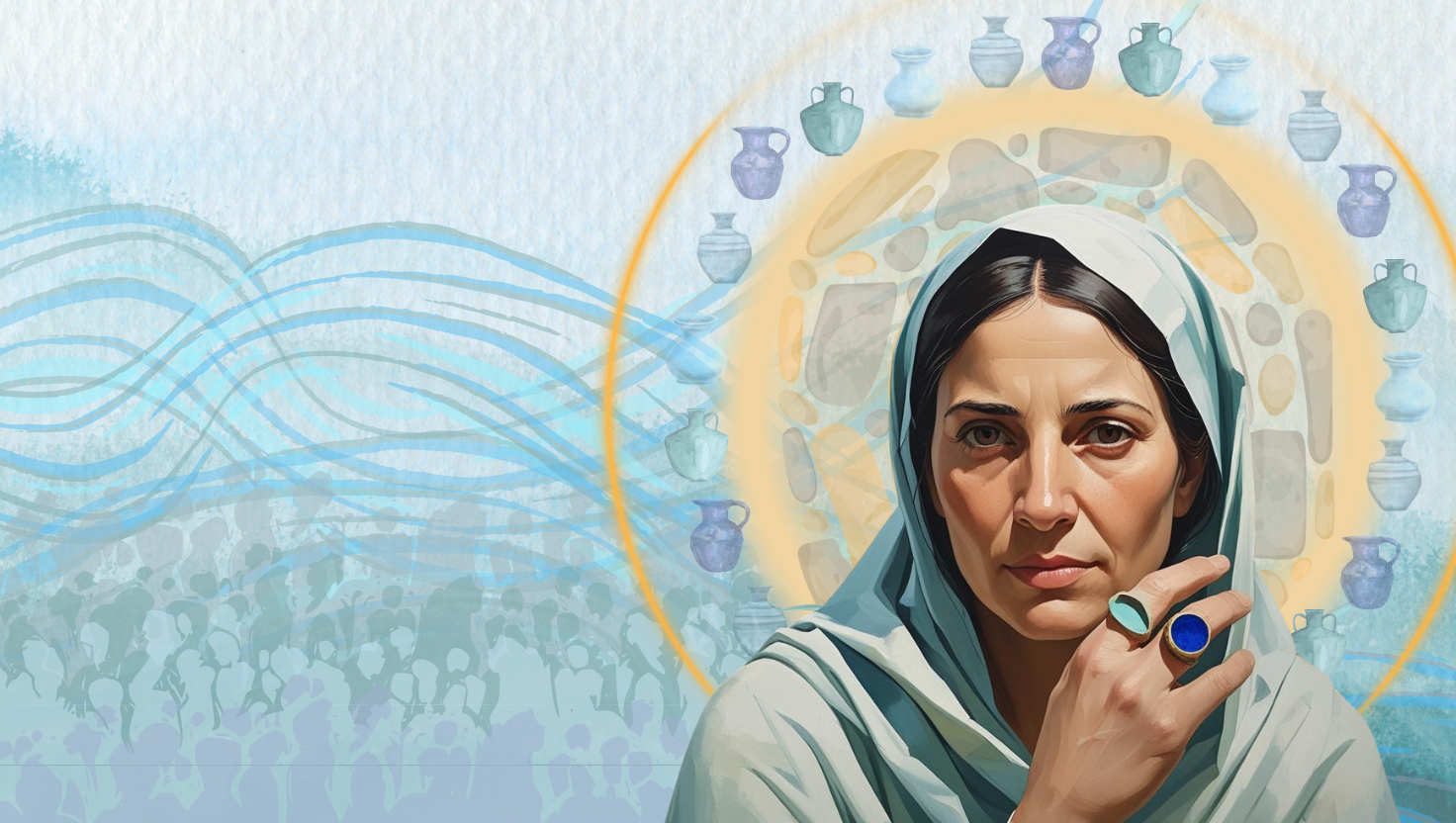
A Deep Well
A closer look at the Samaritan Woman at the well and what her story means for today
-
Introduction
-
Getting Started
-
John 4:4-9
-
Lesson 1: Location
The Gospel of John gives us an unusual amount of geographical detail. In this unit, we follow Jesus’ travels through the region, exploring the roads, places, and movements that lead to Jacob’s well and asking why location matters so much in this story.
-
Lesson 2: History
The Gospel writer tells us that Jews and Samaritans did not associate with one another, but that brief statement carries centuries of shared history, conflict, and division. In this unit, we explore the relationship between Judeans and Samaritans, tracing the historical events that shaped their communities and considering what that history reveals about Jesus’ conversation at the well.
-
Lesson 3: A surprising discovery
The Gospel writer tells us that Jews and Samaritans did not associate with one another, but that brief statement carries centuries of shared history, conflict, and division. In this unit, we explore the relationship between Judeans and Samaritans, tracing the historical events that shaped their communities and considering what that history reveals about Jesus’ conversation at the well.
-
Lesson 4: Summary
Jesus and the Samaritan woman carry with them centuries of shared history, division, and disagreement about identity, belonging, and worship. In this unit, we explore the historical relationship between Judeans and Samaritans and consider how that history shapes the questions that emerge in their conversation. As we move forward, that history will give way to deeper theological questions about living water, worship, and what it means to encounter God.
-
-
John 4:9-15
-
Lesson 1: Jacob's Well
For her, that’s where the story of her people is anchored. Abraham. Jacob. Joseph. Not David. Not Jerusalem. The places that matter to her people are tied to those earlier promises, to different land, different worship. So when she says “our father Jacob,” she’s not just naming someone from the past. She’s placing herself inside that line. And she’s placing Jesus in relation to it.
-
Lesson 2: "Give me this water"
She’s still taking him literally. He’s sitting at a well, a deep one. If you want water, you need something to lower down into it and pull it back up, and he doesn’t have that.
-
Lesson 3: So what
She’s still at the well.
She’s thinking about water she can carry.
Jesus is talking about something she can’t see yet.They’re standing in two different places.
Different social locations.
Different understandings of God.
Different ways of hearing the same words.She asks for the water.
And Jesus turns toward her, not to explain it,
but to meet her there..
-
-
John 4:15-26
-
Lesson 1: Where is her husband?
Jesus has just been talking with her about water.
She’s asked for it.
And instead of explaining what he means, he turns the conversation.
He makes it personal.
-
Lesson 2: What does Messiah Mean
The Samaritan woman has called him a prophet. She’s named what she’s been waiting for.
And now she asks the question her people have been living with for generations.
“Our ancestors worshiped on this mountain, but you say that the place where people must worship is in Jerusalem.”
-
Lesson 3: Worship in Spirit and Truth
She’s called him a prophet. She’s named what she’s been waiting for.
Now she asks the question that has shaped her people.
-
Lesson 3: So What?
She’s waiting for the messiah; Jesus is waiting for the disciples.
-
-
John 4:27, 31-38
-
Lesson 1: The Disciples were shocked
The disciples have been following him. They’ve been watching him move through towns, teach, and speak to people.
And this still surprises them.
-
Lesson 2: Eat Rabbi
He’s not talking about bread. He’s talking about what sustains him. He’s talking about purpose. He’s talking about doing the work he was sent to do.
-
Lesson 3: What has already begun
The disciples are out of step with Jesus' timeline. They think they are still waiting for Jesus to save the world. They are waiting for him to do what he was sent to do.
-
Lesson 4: So what?
They go into Sychar, come back with food, and miss the chance to see what God is already doing there. They’ve been formed for this. They’ve been sent into it. And they’re still waiting for someone else to do it.
-
-
John 4:28-30, 39-42
-
Lesson 1: Come and See
What happens at the well does not stay at the well. It moves into the town. It moves through the people. It becomes something shared, something lived, something experienced together.
-
Lesson 2 - Saint Photini
In the Orthodox Church, Photini is remembered as “Equal to the Apostles,” a title given to those whose witness shaped the spread of the church in ways comparable to the original disciples. She is remembered as a martyr, a teacher, and a voice that carried far beyond that first conversation at the well.
-
-
Sacred Narratives
Meet your instructors
✳
Meet your instructors ✳


KATE
MACK
It all begins with an idea. Maybe you want to launch a business. Maybe you want to turn a hobby into something more. Or maybe you have a creative project to share with the world.
What you’ll learn

-
Describe your lesson with a short summary.

-
Describe your lesson with a short summary.

-
Describe your lesson with a short summary.
Course FAQ
-
It all begins with an idea. Maybe you want to launch a business. Maybe you want to turn a hobby into something more. Or maybe you have a creative project to share with the world. Whatever it is, the way you tell your story online can make all the difference.
-
It all begins with an idea. Maybe you want to launch a business. Maybe you want to turn a hobby into something more. Or maybe you have a creative project to share with the world. Whatever it is, the way you tell your story online can make all the difference.
-
It all begins with an idea. Maybe you want to launch a business. Maybe you want to turn a hobby into something more. Or maybe you have a creative project to share with the world. Whatever it is, the way you tell your story online can make all the difference.